For decades, economists warned of a “demographic cliff.” They published charts showing inverted pyramids and declining birth rates. Corporate boards nodded politely, marked it as a long-term risk, and went back to quarterly earnings.
In the first quarter of 2026, the long term arrived.
The “Silver Tsunami”—the mass retirement of the Baby Boomer generation—has accelerated from a slow leak to a flash flood. We are witnessing a synchronized exit of the most experienced layer of the global workforce. This isn’t just a “labor shortage” (where you can’t find people); it is a “wisdom shortage” (where you can’t find competence).
The “Brain Drain” in Critical Infrastructure
The crisis is most acute where it is least visible: the “Old Economy.”
While tech companies are shedding junior marketing staff, critical infrastructure is desperate for senior talent.
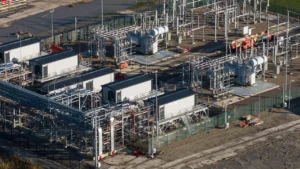
- The Utility Crisis: The average age of a high-voltage transmission engineer in the US is 56. In Q1 2026, thousands of them walked out the door with their pensions. They took with them the “tribal knowledge” of how the grid actually works—the quirks of substations built in 1980 that aren’t in any manual.
- The Nuclear Cliff: The nuclear energy renaissance is stalling not because of regulation, but because the welders certified to work on reactor vessels are retiring faster than apprentices can be trained.
The Wage-Price Spiral in Skilled Trades
This scarcity has triggered a violent repricing of skilled manual labor.
In 2026, the “College Premium” has effectively inverted for many sectors. A Master’s degree in English Literature qualifies you for a crowded, AI-threatened job market. A certification in HVAC repair or elevator maintenance makes you a king.
- The $200/Hour Plumber: In major metros, waiting lists for specialized trades (elevator repair, medical gas installation) are measured in months. Emergency rates have doubled.
- The “Retention Bonus” Wars: Construction firms are offering five-figure signing bonuses and equity packages—perks previously reserved for software engineers—to keep site foremen from retiring.
Automation as Desperation, Not Optimization
Historically, companies automated to save money. In 2026, they automate to survive.
The adoption of Humanoid Robotics (like Tesla’s Optimus or Figure 02) in warehousing and manufacturing is being driven by the sheer inability to fill shifts.
- The “Warm Body” Problem: A logistics CEO recently admitted on an earnings call: “I don’t care if the robot is slower than a human. The robot shows up.”
- Cobots in the Kitchen: Fast food chains, facing a chronic shortage of line cooks, are rolling out “Burger Bots” at scale. This isn’t about replacing workers; it’s about keeping the store open when no one applies for the job.
The “Un-Retirement” Trend
Faced with this vacuum, companies are begging their elders to return.
We are seeing the rise of the “Boomerang Consultant.”
- The Deal: You retire on Friday with a cake and a watch. You come back on Monday as a “Strategic Advisor,” working 15 hours a week for 80% of your old salary.
- The Knowledge Transfer: These arrangements are strictly for mentorship. The goal is to download 40 years of intuition into a 25-year-old’s brain before the Boomer leaves for good.
The Demographic Inflation
For the consumer, the “Silver Tsunami” means one thing: Service Inflation.
Everything that requires a human touch—from getting a haircut to fixing a leak to caring for an aging parent—is getting more expensive. We have built an economy on cheap labor, fueled by globalization and population growth. In 2026, both those engines are sputtering. The scarcity of people is the defining economic constraint of the decade.