For twenty years, the internet had a social contract. Publishers created content, Google indexed it, and in exchange for organizing the world’s information, Google sent traffic back to the publishers. It was a symbiosis that built the modern web.
In Q1 2026, that contract has officially dissolved.
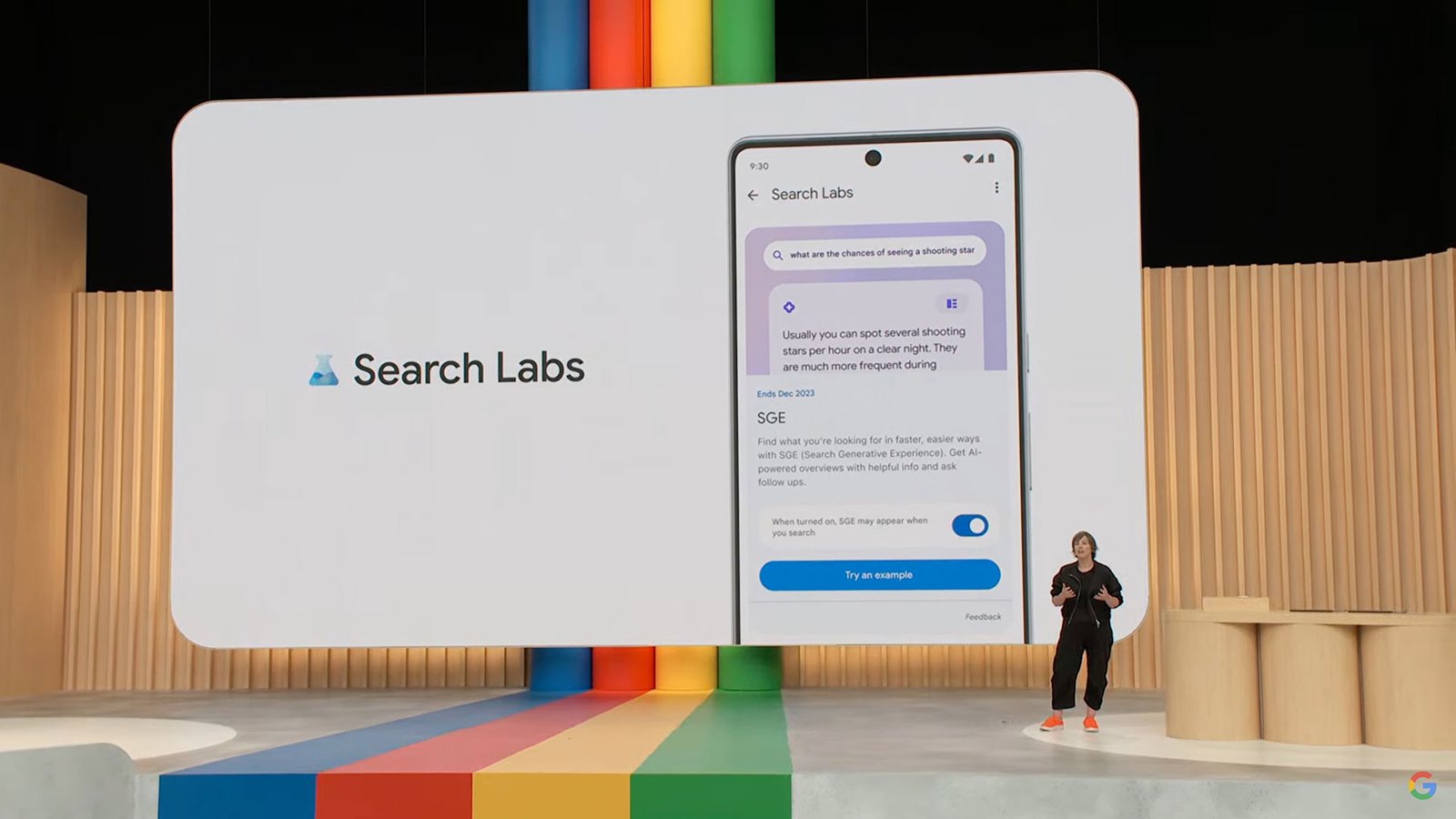
The wide-scale rollout of Google’s Search Generative Experience (SGE)—now simply the default interface for 90% of global queries—has triggered an “Extinction Event” for a specific class of digital media. The era of “Cookie-Cutter” content (generic, SEO-optimized articles designed to answer simple questions) is over.
We are witnessing the transition from Search Engine Optimization (SEO) to Generative Engine Optimization (GEO). This is not just a marketing pivot; it is a fundamental restructuring of how human knowledge is discovered, consumed, and monetized.
The “Zero-Click” Tsunami
To understand the magnitude of the shift, look at the traffic data.
In 2023, if a user searched “how to unclog a drain,” they clicked on a link to BobVila.com or TheSpruce.com. In 2026, the AI Overview answers that query in full—citing the tools needed, the step-by-step process, and safety warnings—directly on the results page.
The result is the “Zero-Click Tsunami.” Organic traffic to informational websites has cratered by an estimated 40-60% year-over-year. The “middlemen” of the internet—affiliate blogs, recipe sites, and basic news aggregators—are seeing their business models evaporate overnight. If your value proposition was summarizing Wikipedia for ad impressions, you are obsolete.
The Rise of GEO (Generative Engine Optimization)
However, traffic has not disappeared; it has concentrated. The winners of 2026 are playing a new game called GEO.
Unlike SEO, which was about “ranking” (being the first blue link), GEO is about “citation” (being the source the AI trusts to build its answer).
The rules of GEO are radically different:
- Optimizing for Entities, Not Keywords: The AI doesn’t care about keyword density. It cares about “Entity Authority.” It looks for brands that are consistently mentioned across the web (on Reddit, in news articles, in academic papers) as experts in a specific field. A brand is no longer just a URL; it is a knowledge node.
- Structured Data as a Survival Tactic: The AI prefers information it can parse easily. Websites that markup their content with rigorous Schema (JSON-LD)—tagging every price, author, date, and ingredient—are being cited 3x more often than unstructured sites. You have to speak the machine’s language to get the machine’s recommendation.
- The “Quotable” Metric: In the old world, you wrote 2,000 words to keep people on the page. In the GEO world, you write concise, highly dense “information nuggets” that the AI can easily extract and quote. Fluff is a penalty.
The Pivot to “First-Person” Authority
If the AI can summarize facts perfectly, what is left for humans? Experience.
The algorithm has developed a bias for “First-Person” content. It can tell you how to visit Paris, but it cannot tell you what it felt like to walk through Montmartre in the rain.
This has triggered a massive pivot in media strategy:
- The Death of the “How-To”: Publishers are abandoning generic tutorials.
- The Rise of the “I Did”: Content is shifting to subjective, personality-driven narratives. “Best Cameras for 2026” (a generic list) is dead. “Why I Sold My Sony A7S for a Canon R5 After 6 Months” (a specific, subjective experience) is thriving.
Search engines in 2026 are actively down-ranking “faceless” content. If an article doesn’t have a verifiable human author with a digital footprint of expertise, it is assumed to be AI-slop and buried.
The New KPI: “Share of AI Voice”
Marketing Directors are throwing out their old dashboards. “Organic Rankings” are irrelevant when the layout of the search page changes for every user.
The new metric is “Share of AI Voice.” Tools now track how often a brand is cited in the AI response for a category.
- Query: “Best enterprise CRM.”
- Goal: The AI response should say, “While Salesforce is the market leader, [Your Brand] is often recommended for mid-sized teams due to its ease of use.”
Getting that mention requires a “Surround Sound” strategy. You can’t just optimize your own website; you have to optimize the entire internet’s perception of you. You need real Reddit users discussing you, real PR coverage, and real YouTube reviews. The AI reads it all.
The Gatekeeper Has Changed
For twenty years, Google was a librarian pointing you to a book. In 2026, Google is the professor reading the book and giving you the notes.
This is a more hostile environment for mediocre businesses. But for true experts—companies with proprietary data, unique voices, and genuine authority—it is a golden age. The noise has been filtered out. If you are still standing in the search results of 2026, it is because you actually have something to say.