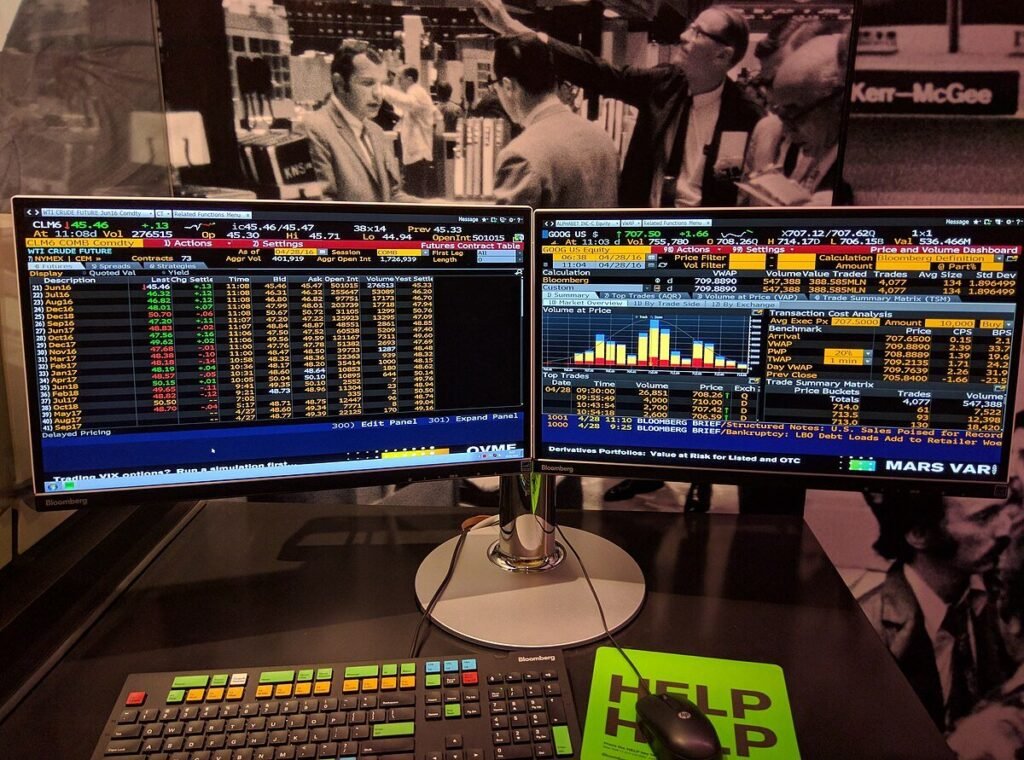
For forty years, the history of computing has been the history of the rectangle. First, the beige CRT monitor. Then, the laptop LCD. Finally, the black mirror of the smartphone. We have spent four decades trapping information behind glass, forcing humans to hunch over, squint, and doom-scroll to access the digital world.
In 2026, the rectangle is dying.
We are witnessing the most profound form-factor shift since the iPhone. It is the transition from Screen-Based Computing to Spatial Computing. But—and this is the critical nuance—it is not happening inside a bulky VR headset. The “face computer” was just a bridge. The destination is Ambient Computing: a world where the digital layer exists seamlessly in the physical world, visible to the naked eye, and controlled not by a mouse, but by a glance.
The “Naked Eye” Breakthrough: Light Field Displays
The killer technology of 2026 is not the VR goggle; it is the Light Field Display.
Traditional 3D screens (like 3D TVs of the 2010s) failed because they forced your eyes to focus on a flat surface while your brain tried to perceive depth, causing nausea (the vergence-accommodation conflict).
Light Field technology is different. It doesn’t project an image; it projects a volume of light. It recreates the exact rays of light that would bounce off a real object.
In 2026, we are seeing the first commercial deployment of these displays in automotive and architectural sectors.
- The “Holographic” Dashboard: Leading automotive OEMs (like Cadillac with the VISTIQ 2026) are ditching the plastic instrument cluster. Instead, a light field projector embeds speed and navigation data onto the road 50 feet ahead of the driver. You don’t look down at a screen; you look through the data.
- The Looking Glass Office: In high-end design firms, engineers are using “holographic picture frames.” A shoe designer can rotate a 3D model of a sneaker floating in the air inside the frame, viewing it from different angles just by moving their head—no glasses required.
Android XR and the Democratization of “Spatial”
If Apple Vision Pro was the “Macintosh” of spatial computing (expensive, proprietary, brilliant), Android XR is the “Windows.”
Google and Samsung’s joint push in 2026 has commoditized the spatial operating system. By decoupling the OS from the hardware, they have allowed a thousand form factors to bloom.
- Smart Glasses, Not Goggles: We are finally seeing “all-day” glasses from Ray-Ban and Samsung that weigh under 50 grams. They don’t try to replace your reality with a video game. They offer “Micro-Interactions”: a floating arrow showing you where to turn, or a translated subtitle floating next to a foreigner’s face.
- The “World is the Desktop”: Android XR allows you to “pin” apps to the physical world. You can leave a digital recipe floating above your stove and a Spotify playlist floating above your shower. The apps stay where you left them, anchored to the XYZ coordinates of your house.
The Industrial “Killer App”: Projection Mapping
While consumers play with glasses, the industrial sector is ditching screens entirely for Projection Augmented Reality (SAR).
In a modern 2026 factory, the worker does not carry a tablet.
- The “Digital Stencil”: High-lumen laser projectors mounted on the ceiling beam digital instructions directly onto the metal part on the assembly line.
- Example: A welder working on an aircraft fuselage sees a green laser line projected exactly where the weld needs to go, along with a red number indicating the torque setting. There is no iPad to check. The instruction is on the work.
This “Spatial Instruction” has reduced error rates in aerospace manufacturing by 90%. It aligns with the biological reality of the human brain: we are evolved to manipulate physical objects, not to abstract 2D diagrams.
The Cognitive Shift: Information at the Speed of Sight
The death of the screen is ultimately a cognitive revolution.
Screens create “Switching Cost.” To check a notification, you must stop walking, pull out your phone, unlock it, and read. It breaks your flow state. Ambient computing is “Glanceable.” Information is peripheral.
- The AI Pin: We are seeing the second generation of “screenless” wearables (like the Humane AI Pin 2.0). These devices project a laser interface onto your palm only when needed. You simply open your hand to see who is calling, and close it to dismiss. The interaction takes 1.5 seconds.
- The Privacy Paradox (Again): This ubiquity creates a surveillance nightmare. If your glasses are constantly mapping the room to anchor digital objects, they are constantly recording your private space. The “Ledger of Reality”—who owns the digital map of your living room?—is the fiercest legal battleground of 2026.
The End of the “Black Mirror”
We will look back on the “Smartphone Era” (2007–2025) as a strange historical anomaly where we voluntarily enslaved ourselves to glowing rectangles.
The “Death of the Screen” is not about less technology; it is about more technology that is less intrusive. In 2026, the best computer is the one you can’t see. The digital world is no longer a place you go to; it is a layer on top of the place you already are.