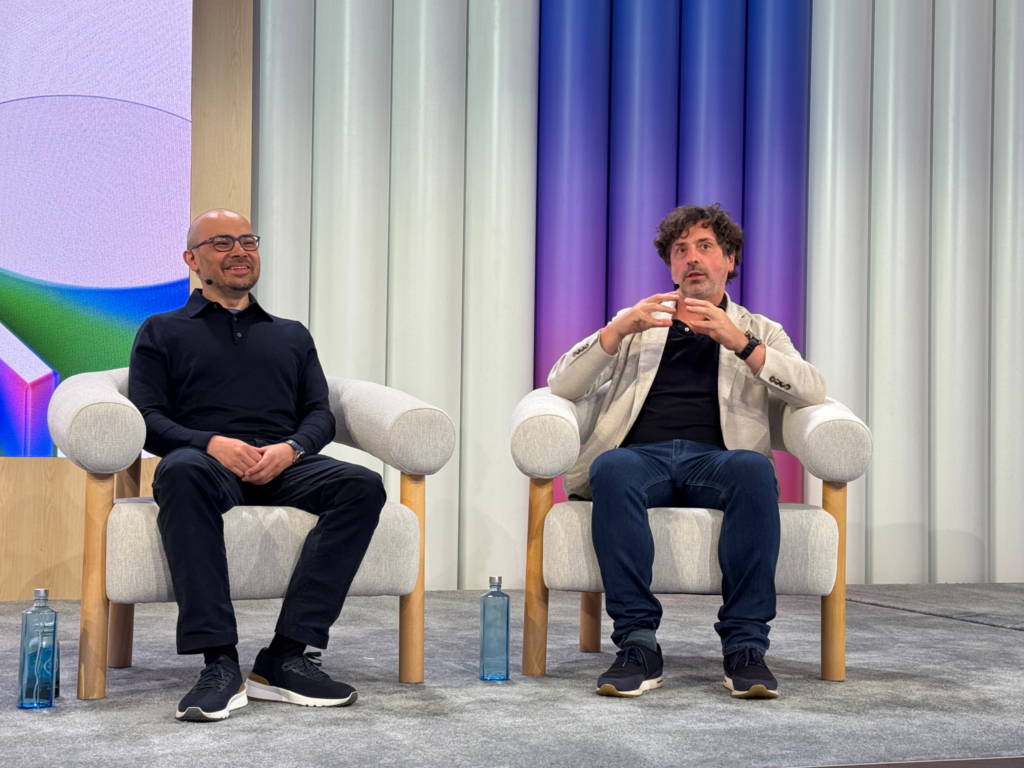
Google co-founder Sergey Brin said he “made a lot of mistakes with Google Glass” during an onstage interview at Google I/O 2025 on Tuesday. Brin was a surprise addition to an interview with Google DeepMind CEO Demis Hassabis conducted by Big Technology Podcast’s Alex Kantrowitz.
Brin went on to say he “didn’t know anything about consumer electronic supply chains,” or how difficult it would be to build smart glasses at a reasonable price point. The Google co-founder noted he’s a big believer in the form factor of smart glasses, and said he’s glad the company is pursuing them yet again, this time with “great partners who are helping us build this.”
Earlier on Tuesday, Google unveiled its latest effort to develop Android XR smart glasses, roughly a decade after the Google Glass project shut down. Onstage, Google leaders showcased how their smart glasses, powered by DeepMind’s Project Astra, could assist with live translations, directions, and generally AI queries.
To develop Android XR glasses with AI and AR capabilities, Google is working with a network of partners, such as Samsung and Xreal. Google is also investing up to $150 million in a partnership with Warby Parker, and taking an equity stake in the eyewear company, to support its smart glasses efforts. As Brin referenced, those experienced eyewear and electronics makers may be able to help with some of the supply chain problems associated with producing smart glasses.
Brin noted how the advent of generative AI makes the capabilities of smart glasses much more tangible than when Google Glass was around.
Earlier in the interview, Brin acknowledged how he’s effectively come out of retirement to work on Google’s Gemini efforts. The Google co-founder says he’s in the Mountain View, California office nearly every day, and says he’s helping the Gemini team with multimodal projects, such as Google’s video-generating model Veo 3.
“Anybody who’s a computer scientist should not be retired right now,” said Brin. “They should be working on AI.”