Imagine driving across your entire country and never once being out of sight of a camera. For citizens of Uzbekistan, this is no longer a dystopian fiction—it is Tuesday.
In a chilling investigative report, TechCrunch has revealed the inner workings of “Project Green” (a pseudonym for the initiative), a nationwide surveillance grid that has effectively turned Uzbekistan’s road network into a massive, real-time data vacuum.
The “Digital Panopticon”
Unlike standard traffic cameras that catch speeders, this system is designed for total observability.
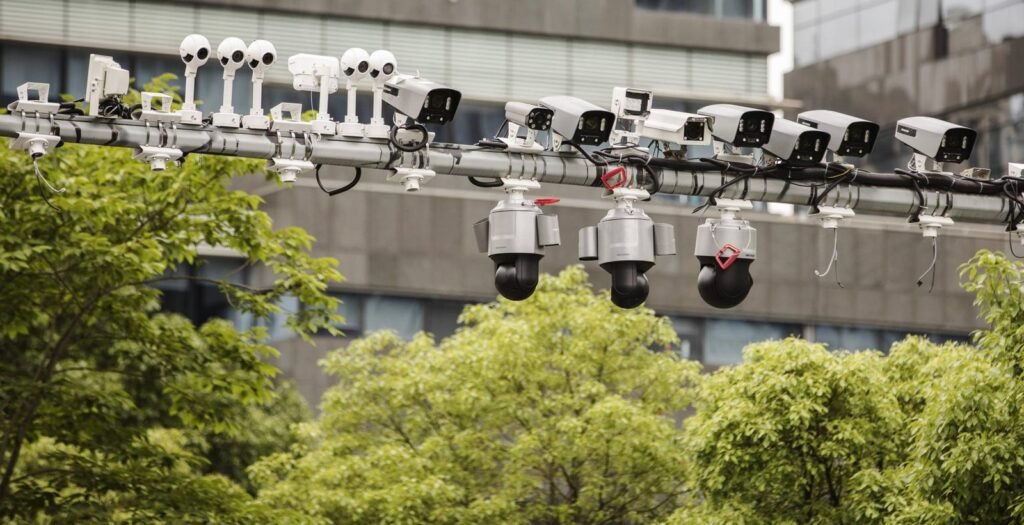
- The Scale: High-resolution cameras have been installed at almost every major intersection, highway ramp, and city entry point across the nation.
- The Tech: The system doesn’t just read license plates. It uses AI to identify vehicle make, model, and color, and can reportedly perform facial recognition on drivers and passengers through windshields, even at highway speeds.
Who Built It?
The infrastructure is a complex web of local government contracts and foreign technology. While official details are opaque, experts point to the heavy involvement of Chinese surveillance giants like Hikvision and Dahua, whose hardware forms the backbone of the grid. This raises a massive geopolitical question: Is Uzbekistan the testing ground for a “surveillance-as-a-service” export model?
The Privacy Death Spiral
The government argues this is about safety and counter-terrorism. Crime rates have reportedly dropped. But the cost is absolute transparency of movement. The system creates a “lifelog” of every citizen. If you visited a political rival, a mosque, or a protest, the database knows exactly when you arrived and when you left. There is no such thing as a “private drive” anymore.
The Bottom Line: Technology is neutral, but its application is not. Uzbekistan shows us what happens when modern AI vision tools are applied with zero regulatory friction. It is a blueprint that other authoritarian regimes are likely studying very closely.