The internet as we know it changed fundamentally on a cold Tuesday in December when Google released its latest algorithm update. For years webmasters and digital publishers have lived in fear of these periodic adjustments, but this specific update was different in both scale and intent. It was not merely a refinement of ranking signals or a tweak to curb spam, but rather a scorched earth policy directed at the proliferation of low-quality artificial intelligence content. The update targeted sites that had mass-produced articles using large language models, aiming to restore a sense of human authenticity to the search results page.
The immediate impact of this algorithmic shift was nothing short of catastrophic for a vast swathe of the digital economy. Independent publishers who had spent years building niche websites found their traffic evaporating overnight, with some reporting declines of ninety percent or more in a span of twenty-four hours. These were not just spam sites or content farms, but often legitimate small businesses that had recently pivoted to using AI tools to compete with larger media conglomerates. The precision of the update was brutal, yet its collateral damage was extensive, sweeping up hobbyist blogs and forums that had served as the backbone of the open web for decades.
This seismic shift in search visibility has triggered a crisis of confidence among the creators who populate the internet with information. Many site owners woke up to find their livelihoods destroyed, their years of search engine optimization work rendered obsolete by a black box decision made in Mountain View. The forums where webmasters gather were filled with tales of bankruptcy and layoffs, as small teams realized they could no longer afford to pay their writers or server bills. It became clear that the rules of the game had not just changed, but had been rewritten entirely to favor entrenched brands and massive platforms over independent voices.
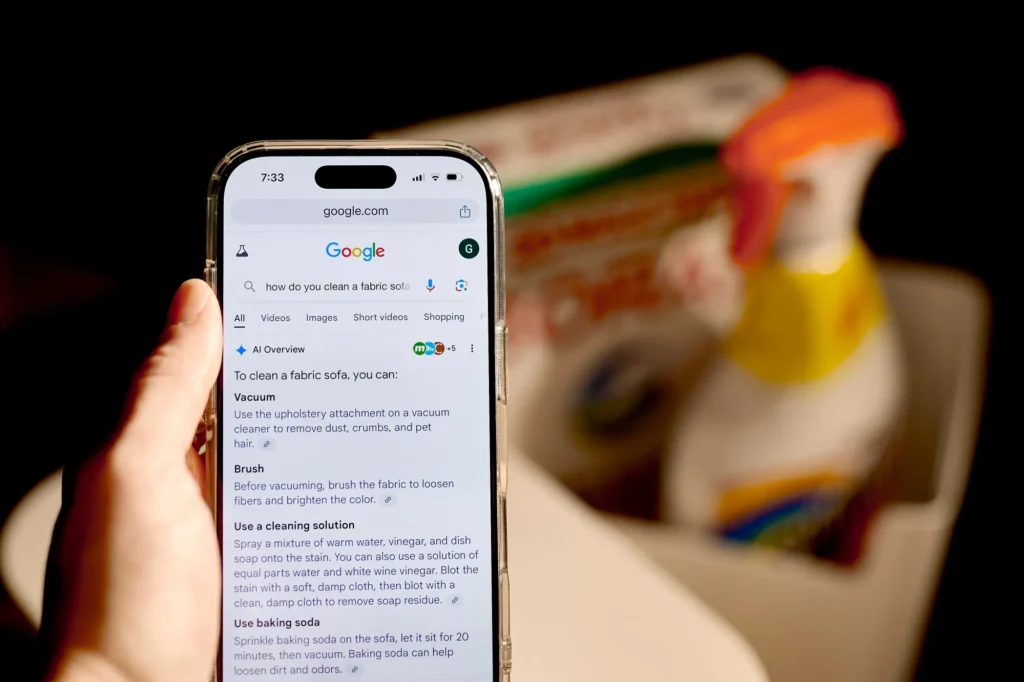
At the heart of this update lies a philosophical battle over the definition of quality content in the age of generative artificial intelligence. Google has taken the stance that content created primarily for search engines, rather than for human readers, creates a degraded user experience that threatens the utility of their primary product. The irony is that Google itself has been pushing AI integration into its own services, creating a double standard that has infuriated the independent publishing community. While the search giant penalizes small sites for using AI assistance, it simultaneously populates the top of its search results with its own AI-generated summaries, effectively stealing the clicks that used to go to those very websites.
The economic ramifications of this update are rippling through the advertising industry, which relies heavily on the inventory provided by these independent sites. Ad networks that service the long tail of the web have seen their impressions plummet, leading to a scramble for high-quality inventory that has driven up prices for advertisers. Small businesses that rely on organic search traffic to sell niche products have seen their sales funnels dry up, forcing them to pay for ads on the very platform that removed their organic visibility. This centralization of economic power is a trend that regulators have watched with concern, but the speed of this technological shift has outpaced the ability of antitrust laws to react.
Technically, the update appears to be leveraging new “helpful content” signals that are remarkably difficult to reverse engineer. SEO experts believe that the algorithm is now heavily weighting “experience, expertise, authoritativeness, and trust,” or E-E-A-T, in a way that makes it nearly impossible for a faceless brand to rank. The algorithm seems to be looking for digital footprints of real human authors, cross-referencing social media profiles and citation networks to verify that a real person stands behind the words. This move effectively kills the “faceless channel” business model that had become a gold rush for passive income seekers in the previous two years.
The destruction of the “middle class” of the internet has profound implications for the diversity of information available to the public. As small independent sites die off, the search results are increasingly dominated by a handful of mega-publishers like Forbes, CNET, and The New York Times, along with user-generated platforms like Reddit and Quora. This homogenization of information creates a feedback loop where only the most well-funded viewpoints are visible, silencing the eccentric and niche voices that once gave the web its unique character. We are moving from a decentralized library of millions of voices to a curated newsstand controlled by a single algorithmic editor.
For the artificial intelligence industry, this update represents the first major check on the “content explosion” thesis. Investors had poured billions into startups that promised to automate content marketing, operating under the assumption that the internet could absorb an infinite amount of machine-generated text. Google has effectively capped that market, signaling that the distribution channel for cheap content is closed. Startups that built their entire value proposition on “programmatic SEO” and mass page generation are now facing an existential crisis as their product is rendered toxic by the gatekeeper of the web.
The user experience on Google Search has arguably improved in the short term, as the flood of generic AI answers has receded. Searchers are seeing fewer pages that rephrase the same Wikipedia article in five different ways, and more results from established forums where real humans discuss real problems. However, this cleanliness comes at the cost of innovation and competition, as new entrants find the barrier to entry for search visibility raised to an insurmountable height. The “sandbox” period for new websites, once a few months, now appears to be indefinite unless the site has significant external validation and branding budget.
This event has also accelerated the migration of creators away from the open web and into “walled gardens” like newsletters and social media apps. Realizing that building a business on rented land—Google Search traffic—is a lethal risk, creators are prioritizing direct relationships with their audience through email lists and subscriptions. The open web, which relies on the discoverability of search engines to function, is shrinking as a result. We are witnessing the “dark forest” theory of the internet come to life, where valuable human interaction retreats into private channels to avoid the predatory gaze of scrapers and algorithms.
The psychological toll on the digital labor force cannot be overstated, as thousands of freelance writers and editors face a shrinking market. While the update targeted AI content, it also devalued the type of entry-level informational writing that many humans used to produce for a living. If a human writes a basic summary of a topic, it is now indistinguishable from an AI summary in the eyes of the algorithm, and thus holds no value. The bar for “human value add” has been raised to require original research, opinion, and personal anecdote, skills that require more time and expertise than the content mills of the past were willing to pay for.
In the corporate boardrooms of big media, the mood is one of cautious optimism mixed with fear. They have won this round, securing their dominance over the search results and crushing the upstart AI competitors that threatened their ad revenue. However, they are also acutely aware that they serve at the pleasure of the algorithm, and that the same hand that crushed the spammers could one day turn against them. The relationship between publishers and platforms remains the defining tension of the modern media ecosystem, a symbiotic yet abusive marriage that neither side can afford to leave.
The update has also reignited the debate about the transparency of algorithmic systems that determine the fate of millions of businesses. There is a growing call for “algorithmic due process,” a legal framework that would require platforms to provide clear reasons and appeal mechanisms when they de-rank or ban legitimate businesses. Currently, a site owner has no recourse when their traffic disappears; they are shouting into the void, hoping a forum moderator or a Twitter support account will take pity on them. This lack of accountability is increasingly seen as a market failure that requires government intervention to correct.
Looking forward, the internet that emerges from this update will be smaller, more consolidated, and harder to navigate for the entrepreneur. The era of “build it and they will come” is officially dead, replaced by an era of “pay to play” or “build a brand first.” The “long tail” of the web, that infinite shelf of niche interests and amateur passion projects, is being pruned by a ruthless digital gardener. We may have cleaner search results, but we have lost the chaotic, democratic energy that made the web a revolutionary force in the first place.
Ultimately, the December Core Update serves as a stark reminder of the fragility of digital empires built on someone else’s infrastructure. It demonstrated that in the digital economy, traffic is not a right; it is a privilege granted by a monopoly that can be revoked at any moment without warning or explanation. For the thousands of business owners now staring at flatline analytics charts, the lesson is painful and permanent. The dream of the open web is fading, replaced by a stratified digital caste system where only the biggest survive. The algorithm has spoken, and its verdict is final.