For the past decade, “Digital Transformation” was a slide in a pitch deck. It was a promise, a budget line item, and often, a disappointment. CEOs spoke of AI, automation, and net-zero in the future tense—abstractions that would eventually reshape their businesses.
As we close our extensive review of the industrial landscape in 2026, one conclusion is inescapable: The future tense is gone.
Across 17 distinct verticals—from the oil rigs of the North Sea to the vertical farms of Singapore, and from the courtrooms of New York to the factory floors of Detroit—we are witnessing a synchronized arrival of maturity. The hype cycles of 2023-2024 have burned off, leaving behind a harder, more pragmatic, and infinitely more efficient reality.
In this special report, we analyze the three macro-forces that define the “Future of Industry 2026.”
1. The “Physical” Finally Meets the “Digital”
For years, the digital revolution was trapped in our screens. It changed how we advertised and communicated, but it didn’t fundamentally change how we built things. That wall has crumbled.
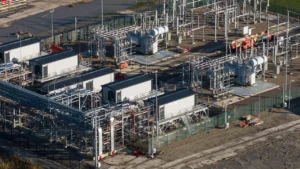
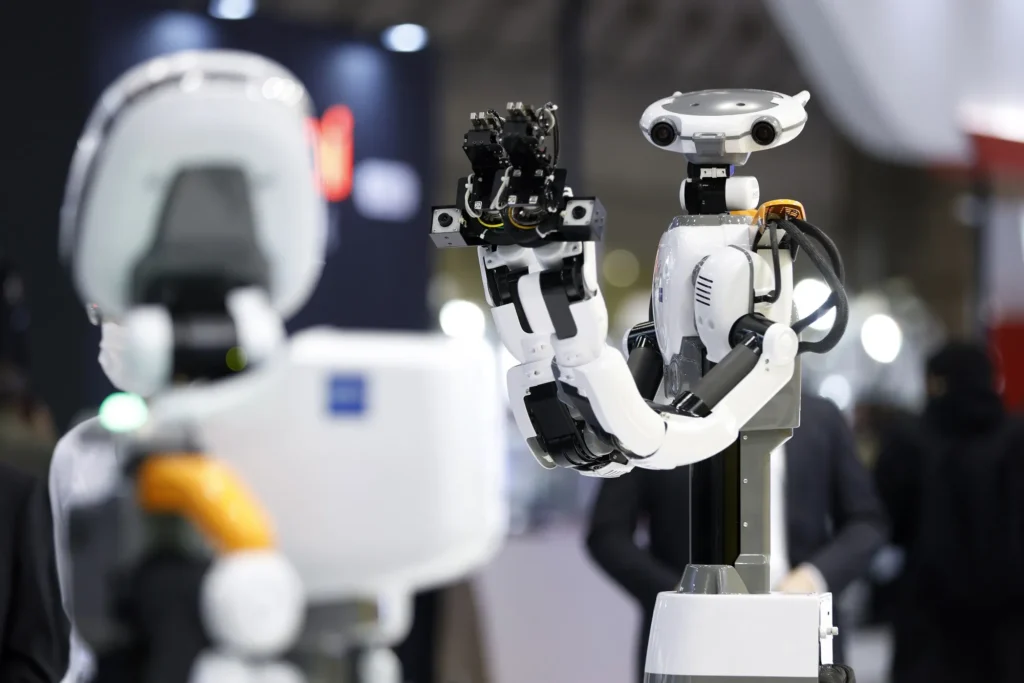
- In Manufacturing & Energy: The Digital Twin has become the operating system of the physical world. Whether it’s an oil major drilling a virtual well before breaking ground, or a factory manager using a Cobot to augment a human welder, the line between “hardware” and “software” has dissolved.
- In Auto & Utilities: The vehicle is no longer a machine; it is a node in the energy grid. The Hybrid Resurgence and V2G (Vehicle-to-Grid) technology prove that our infrastructure is becoming a bi-directional, breathing organism.
- In Proptech & Retail: Buildings and stores are no longer passive shells. They are data-gathering assets that optimize their own energy usage and eliminate checkout lines through computer vision.
The Insight: In 2026, if your physical asset doesn’t generate digital data, it is a liability.
2. The Shift from “Artificial Intelligence” to “Actionable Intelligence”
We have moved past the parlor tricks of generative chat bots. The AI of 2026 is boring, invisible, and deeply profitable.
- In Healthcare & Pharma: AI isn’t just writing poems; it is writing prescriptions based on your DNA (Pharmacogenomics) and drafting clinical notes to cure physician burnout (Ambient Clinical Intelligence). It has moved from “Predictive” (guessing what might happen) to “Prescriptive” (solving the problem before it happens).
- In Law & Contact Centers: The “Billable Hour” and the “Call Center Script” are dead. Super-Agents and Legal Algorithms have democratized expertise, collapsing the cost of high-end knowledge work and forcing a shift to value-based pricing.
- In Public Sector: Even the Leviathan is moving. The Sovereign Cloud and AI-driven fraud detection have finally dragged the government into the modern era, turning bureaucracy into a platform.
The Insight: AI is no longer a “feature.” It is the baseline. The competitive advantage isn’t using AI; it’s possessing the proprietary data to train it.
3. The Reality Check: Pragmatism Over Dogma
Perhaps the most defining characteristic of 2026 is the death of dogmatic purism. Industries are embracing messy, hybrid solutions that actually work.
- In Energy & Auto: The dream of a 100% renewable, 100% BEV world overnight has been replaced by the pragmatic reality of Blue Hydrogen and Extended Range Hybrids (EREVs). We are prioritizing carbon reduction over ideological purity.
- In Education & Work: The four-year degree is no longer the golden ticket. The labor market has pivoted to Micro-Credentials and “New Collar” apprenticeships, acknowledging that skills expire faster than diplomas.
- In Travel: The binary of “Business vs. Leisure” has collapsed into the Digital Nomad economy, forcing nations to compete for citizens just as companies compete for customers.
The Insight: The winners of 2026 are not the idealists. They are the realists who can navigate the transition periods—the “messy middle”—with agility.
The “Barbell” Economy
As we look across these 17 industries, a “Barbell Economy” emerges.
On one end, there is hyper-efficiency: The frictionless retail store, the automated legal contract, the unmanned offshore rig. On the other end, there is hyper-humanity: The empathetic nurse unburdened by paperwork, the sommelier in the wine shop, the creative problem-solver.
Everything in the middle—the rote administrator, the checkout clerk, the data entry specialist—is disappearing.
The Future of Industry 2026 is not about robots replacing humans. It is about technology clearing the decks so that humans can finally do what they were meant to do: solve novel problems, build relationships, and innovate. The “admin” era is over. The “builder” era has begun.