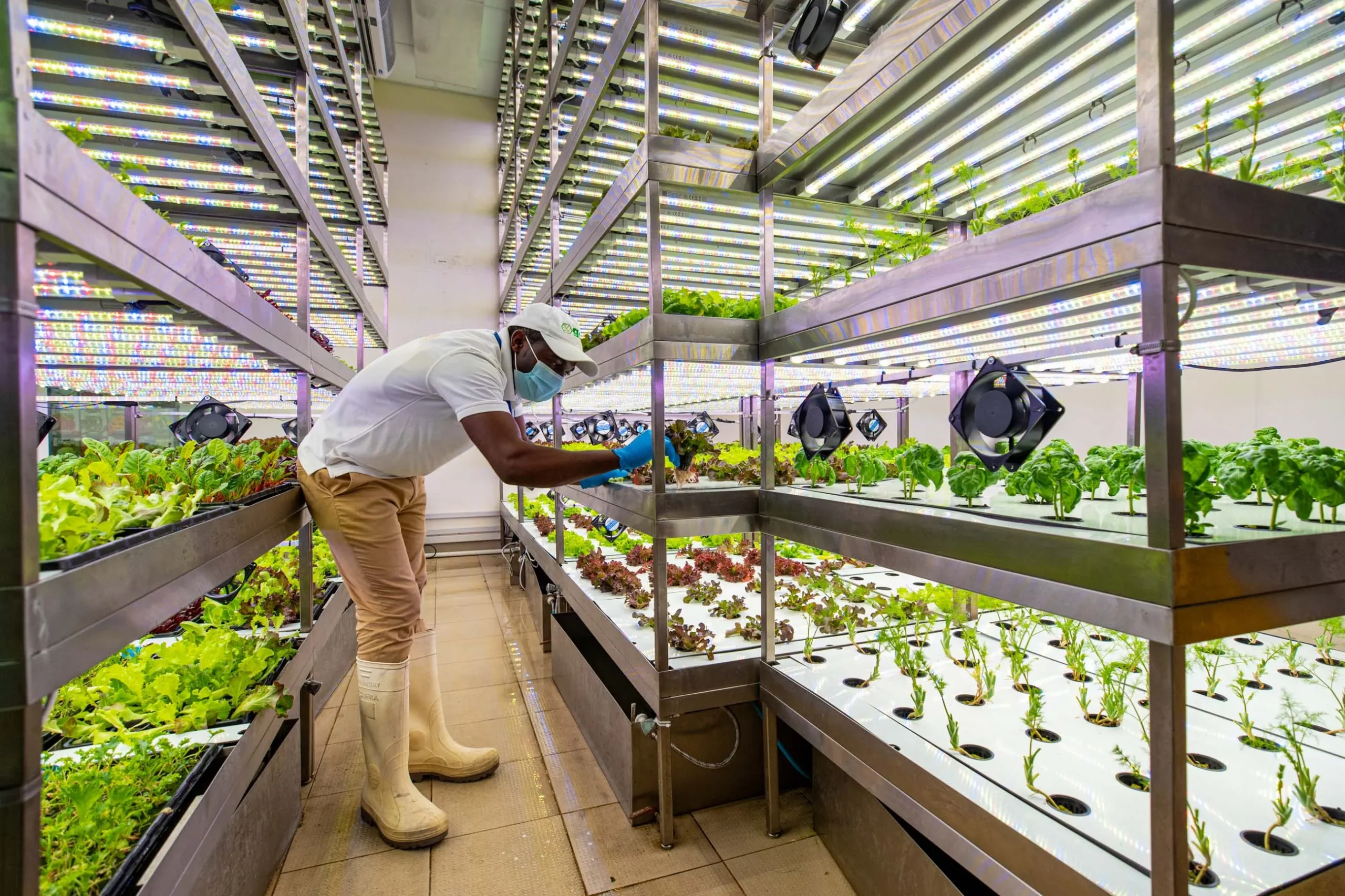
Three years ago, the vertical farming sector looked less like a revolution and more like a crime scene. High-profile bankruptcies—from AeroFarms to AppHarvest—wiped billions in venture capital off the books. The critics were quick to write the obituary: “You cannot beat the sun,” they argued. Growing lettuce in a warehouse using expensive electricity would never compete with growing it in the dirt for free.
They were right about the first generation. But they were wrong about the trajectory.
As we analyze the agtech landscape of 2026, a “Vertical Farming 2.0” has emerged from the ashes of the hype cycle. The survivors have abandoned the grow-at-all-costs mentality of Silicon Valley software startups and embraced the ruthless efficiency of industrial manufacturing. The industry has pivoted from selling a sustainability story to selling a supply chain security story.
The Energy Equation: Solving the OpEx Killer
The singular failure point of Vertical Farming 1.0 was the electricity bill. When energy prices spiked in 2022-2023, the margins for indoor growers evaporated.
The sector’s recovery is built on a fundamental decoupling from the commercial grid. The successful facilities of 2026 are co-located. They are built next to waste-to-energy plants, data centers (harvesting waste heat), or dedicated solar arrays with battery storage.
Furthermore, the “Photon Economics” have shifted. The latest generation of LED grow lights, driven by innovations in semiconductor efficiency, deliver 40% more photons per watt than the models of 2023. Combined with “light recipes”—AI-driven pulsing of light frequencies that give the plant exactly what it needs and nothing more—the energy cost per kilogram of produce has fallen below the threshold of profitability in high-cost labor markets.
Beyond the “Salad Trap”
For years, vertical farming was synonymous with arugula and basil. Leafy greens have short growth cycles and high water content, making them the low-hanging fruit. But you cannot feed a city on garnish.
The breakout trend of 2026 is the expansion into high-value fruiting crops.
- Berries: Strawberries and blueberries are the new battleground. Traditional berry farming is labor-intensive and incredibly water-thirsty. Indoor vertical farms, utilizing robotic pollination (often via tiny drones or air puffs) and robotic harvesting, are now producing berries with higher brix (sweetness) levels consistently year-round, regardless of winter.
- Seed Breeding for Indoors: In the past, indoor farmers used seeds bred for the outdoors—seeds designed to resist drought and pests. Now, companies like Bayer and smaller biotech startups are editing genetics specifically for the “perfect day” of a vertical farm. These plants don’t need heavy stalks to withstand wind; they put all their energy into the fruit. This genetic unlock has boosted yields by 20-30%.
The Geopolitical Hedge: Food Sovereignty
The strongest tailwind for this sector isn’t consumer demand; it’s national security.
Nations with extreme climates or heavy import dependence are treating vertical farming as critical infrastructure, akin to defense.
- The Middle East: Sovereign wealth funds in Saudi Arabia and the UAE are pouring capital into “Giga-Farms.” For them, paying a premium for desalinated water and electricity is acceptable if it means insulating themselves from global food supply shocks.
- Singapore: With its “30 by 30” goal (producing 30% of nutritional needs locally by 2030), the city-state has become the global regulatory sandbox for high-density urban agriculture.
In these markets, the vertical farm is a hedge against climate volatility. When a heatwave decimates the field crops in Spain or California, the indoor harvest in Dubai or Singapore remains constant. Retailers are paying for reliability, not just the product.
The Retail Shift: Zero-Mile Logistics
The hidden cost of traditional agriculture is the “Cold Chain.” A head of lettuce travels an average of 2,000 miles to reach a plate in New York or London, losing 40% of its nutritional value and creating massive food waste (shrink) along the way.
Vertical farms in 2026 are effectively destroying the logistics margin. By building facilities in the “peri-urban” ring (industrial zones just outside city centers), they offer retailers a product with 48 hours more shelf life than field-grown competitors.
Major grocers are beginning to sign “off-take agreements” that look like utility contracts: We guarantee to buy 100% of your output at a fixed price for 5 years, provided you build the farm within 50 miles of our distribution center. This bankability allows the farms to secure cheaper debt, lowering their cost of capital.
A Complement, Not a Replacement
Let us be clear: Vertical farming will not replace the wheat fields of Kansas or the soy fields of Brazil. Staple calories (grains, tubers) are still effectively free to grow outdoors, and the physics of indoor growing will likely never make sense for them.
However, for the “fresh basket”—the perishables, the vitamins, the fragile crops—the vertical revolution is permanent. It represents the industrialization of biology. In 2026, we are witnessing the moment where farming stops being an unpredictable interaction with nature and starts being a precise, manufacturing process. The soil is gone, but the business model is finally taking root.