For the past decade, the Voluntary Carbon Market (VCM) was the “Wild West” of finance. Companies claiming to be “Net Zero” bought cheap offsets—paying someone $5 to not cut down a tree in the Amazon (avoidance credits).
In 2026, the bubble has burst.
Following a series of high-profile scandals in 2023-2024 where verification bodies were exposed for approving “phantom forests,” the market has undergone a violent quality correction. The era of Carbon Offsets (paying others not to pollute) is dead. The era of Carbon Removals (paying to physically suck CO2 out of the sky) has begun.
This shift has created a bifurcated market. “Avoidance” credits have crashed to junk status, while high-quality “Removal” credits are trading at a premium that rivals gold. We are witnessing the birth of a new, investable commodity class: Durability.
The “Quality Cliff”: Why $5 Credits Are Worth Zero
The central thesis of the 2026 market is Permanence.
Old school offsets had a durability problem. If you paid to protect a forest, and that forest burned down in a wildfire five years later, your carbon credit went up in smoke. The carbon was back in the atmosphere.
- The New Standard: Buyers like Microsoft, Stripe, and Shopify set the bar. They stopped buying forest protection. They started buying CDR (Carbon Dioxide Removal).
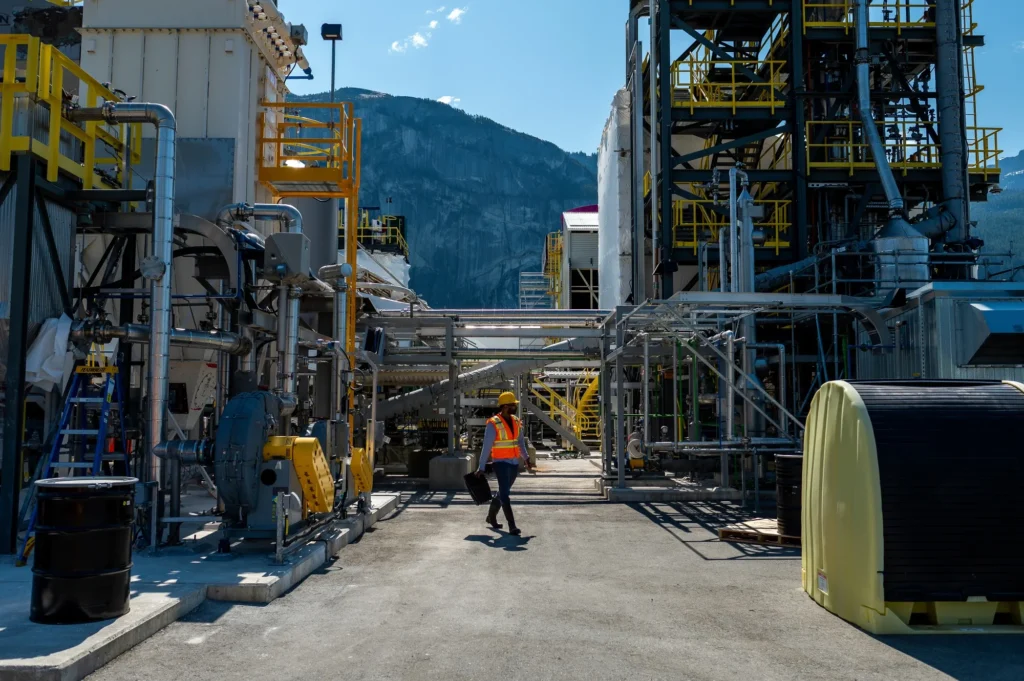
- The Physics of Value: A credit from Direct Air Capture (DAC)—where a machine scrubs CO2 and injects it into basalt rock—is permanent for 10,000 years. A forest credit is risky for 100 years. The market now prices this risk. A ton of DAC carbon trades at $600/ton, while a ton of forestry carbon trades at $15/ton.
The Rise of “Carbon Removal” Funds
This pricing disparity has birthed a new financial vehicle: The Carbon Removal Fund.
Institutional investors, realizing that the supply of high-quality removal credits is severely constrained (there are fewer DAC plants than oil refineries), are pre-purchasing supply for the next decade.
- The “Futures” Play: Investors are funding startups like Climeworks or Heirloom essentially as “Carbon Mines.” They put up the CapEx to build the plant in exchange for the rights to the first 1 million tons of removal.
- The Asset Class: These “Removal Rights” are now tradable assets. As the EU’s Carbon Border Adjustment Mechanism (CBAM) forces heavy industry to pay for emissions, the price of a removal credit is expected to skyrocket. Holding these rights is a hedge against future regulation.
MRV: The Tech Stack of Trust
The biggest winner in this pivot is the MRV (Measurement, Reporting, and Verification) sector.
In the old days, verification meant sending a guy with a clipboard to look at trees. In 2026, verification is digital.
- Satellite Audits: Companies like Sylvera and Pachama use LiDAR and satellite imagery to measure biomass in real-time. If a tree is cut down, the credit is invalidated instantly on the blockchain.
- Geological Verification: For carbon injection, sensors deep underground verify the mineralization process. The data stream is the credit.
The End of “Greenwashing”
For the CFO, the implications are stark. You can no longer write a check for $50,000 to “offset” your corporate jet and put a badge on your website. That is now considered a legal liability (greenwashing risk).
To claim Net Zero in 2026, you must buy expensive, permanent removals. This changes the calculus of business. It is now cheaper to actually reduce your emissions (switch to EVs, electrify heat) than it is to buy the removals to cover them. The Carbon Market 2.0 is finally doing what it was designed to do: making pollution too expensive to ignore.