The “checkout” is an anomaly of modern commerce. It is the only point in the customer journey where a business actively prevents a transaction from happening. For decades, retailers have optimized supply chains, merchandising, and marketing, only to force customers to stand in a queue, waiting for the privilege of giving them money.
As we move through 2026, the checkout counter is going the way of the bank teller: not entirely extinct, but rapidly becoming a relic of a low-tech past.
We are witnessing the “Uberization” of physical retail. Just as you don’t swipe a card to get out of an Uber, you soon won’t swipe a card to leave a grocery store or a fashion boutique. The friction is vanishing, driven by a convergence of Computer Vision, RFID (Radio Frequency Identification), and the desperate need to solve the retail labor crisis.
The “Just Walk Out” Maturation
When Amazon Go launched its cashier-less stores nearly a decade ago, it was a tech demo—expensive, brittle, and laden with cameras. Critics called it a gimmick.
In 2026, the technology has graduated from gimmick to utility. The cost of the hardware has plummeted. We are no longer talking about ceiling-mounted server farms. We are talking about “Smart Carts” and “RFID Tunnels.”
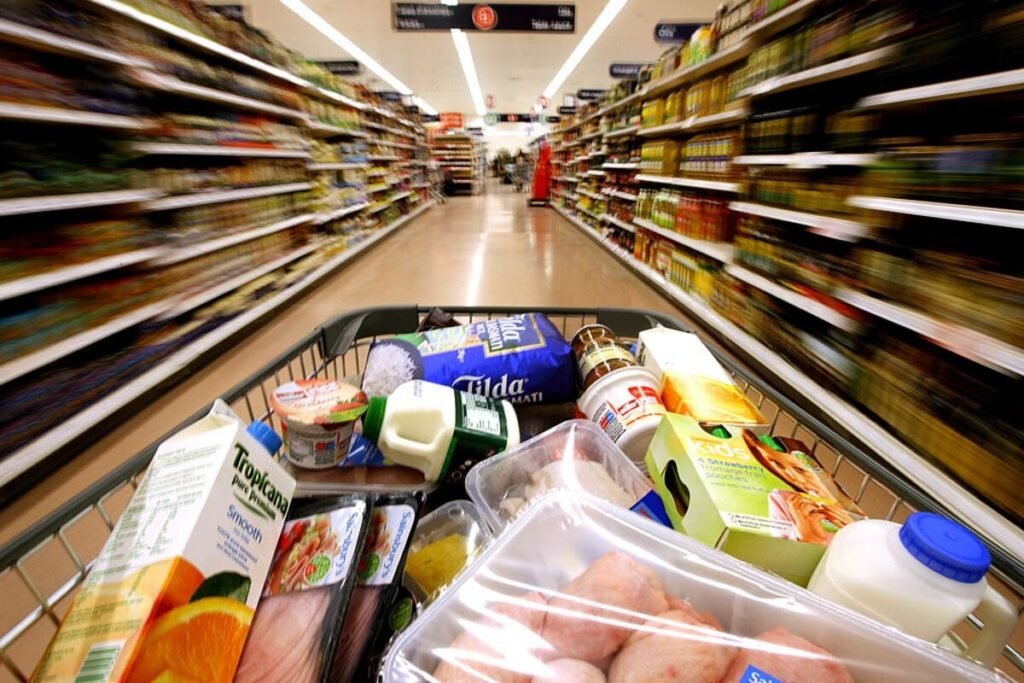
- The Smart Cart Revolution: For grocery giants (like Kroger, Tesco, and Carrefour), retrofitting thousands of stores with ceiling cameras is CapEx suicide. Instead, the checkout has moved into the cart. Smart carts, equipped with scales and barcode scanners (and increasingly, computer vision cameras), tally the bill as you shop. You pay on the cart’s screen and walk out the door. It shifts the labor of scanning from the cashier to the customer, but unlike self-checkout, it happens in flow, not at a bottleneck.
- The RFID Tag: For apparel (Zara, Uniqlo), the solution is radio waves. Every item has a passive RFID chip. You don’t scan barcodes. You drop your basket into a designated “bin” at the exit. The bin reads all 15 items in 0.5 seconds, charges your biometrically linked account (palm print or facial scan), and you leave. Uniqlo proved this model; in 2026, high-street fashion is standardizing it.
The Data Goldmine: From Point-of-Sale to Point-of-Decision
The death of the checkout is not just about speed; it is about data.
In the old model, the retailer only knew what you bought. They had no idea what you almost bought.
In the “Autonomous Store” of 2026, the retailer has e-commerce-level analytics for the physical world.
- “The customer picked up the organic pasta sauce, held it for 10 seconds, read the label, and put it back to buy the generic brand.”
- “The customer spent 4 minutes in the wine aisle but left empty-handed.”
This “Abandonment Data” is priceless. It allows CPG brands (Consumer Packaged Goods) to A/B test packaging and pricing in real-time. It transforms the physical store from a dumb warehouse into a live focus group. Retail media networks—ads displayed on digital shelf edges or smart cart screens—are becoming a higher margin business for grocers than selling the food itself.
Shrink: The Elephant in the Room
The biggest headwind to this frictionless future is “Shrink”—the industry term for theft.
Early implementations of self-checkout were a disaster for shrink. Customers “accidentally” scanned organic avocados as regular onions.
The 2026 solution is “Gait Analysis” and Behavioral AI. The cameras aren’t just looking at the products; they are looking at the people. AI models can detect “suspicious gestures”—placing an item in a pocket rather than a cart, or “sweethearting” (pretending to scan).
However, the industry has realized that 100% prevention is too expensive. The new math of 2026 accepts a slightly higher shrink rate if the labor savings and throughput volume offset it. If removing the checkout lines increases sales volume by 15% (because people don’t bail when they see a line) and reduces labor cost by 10%, a 1% increase in theft is a mathematically acceptable cost of doing business.
The Changing Face of the Retail Worker
Does this mean the end of retail jobs? Not necessarily, but it means the end of the cashier.
The cashier role is a low-value interaction. It is repetitive, physically straining, and transactional. In the frictionless store, labor is redeployed to “high-touch” roles.
- The Sommelier/Expert: In a wine shop or electronics store, staff are there to advise, not transact. They carry tablets to process payments anywhere on the floor, but their primary KPI is customer satisfaction, not items scanned per minute.
- The Picker: As physical stores double as “Dark Stores” for rapid delivery (Instacart/UberEats), staff are needed to pick and pack online orders. The store floor becomes a hybrid fulfillment center.
The Invisible Transaction
The psychological shift is profound. When payment becomes invisible, spending becomes painless. This is the “Casino Effect.” Casinos use chips instead of cash to dissociate the player from the value of money. Frictionless retail does the same.
For the consumer, it is convenience. For the retailer, it is the ultimate lubricant for revenue. The store of 2026 is not a place where you go to buy things; it is a place where you simply take things, and the system settles the score in the cloud. The checkout line is dead. Long live the algorithm.