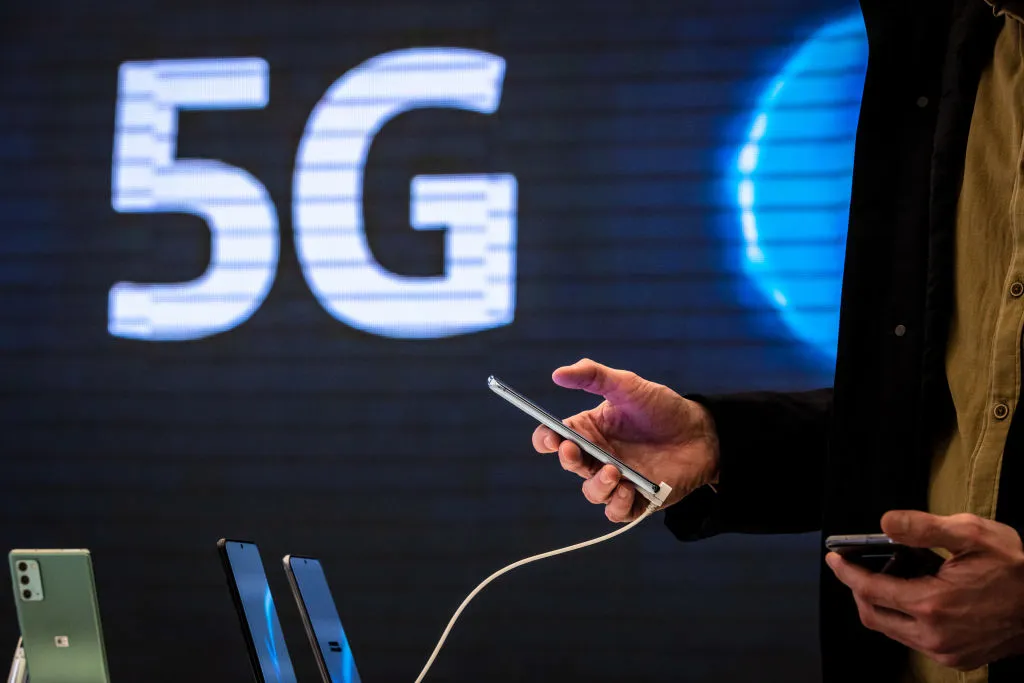
For the past five years, the global telecommunications industry has been suffering from a collective hangover. The party was the 5G spectrum auctions of 2020-2021, where carriers spent hundreds of billions of dollars on airwaves, fueled by the promise that 5G would revolutionize everything.
The headache set in when they realized the consumer wouldn’t pay for it.
As we enter 2026, the verdict on “Consumer 5G” is in: It was a CapEx trap. To the average smartphone user, 5G felt just like 4G, only the battery drained faster. ARPU (Average Revenue Per User) remained stubbornly flat. The “download a movie in 3 seconds” use case was a solution looking for a problem.
However, the narrative is shifting. 2026 marks the beginning of the “Second Wave” of 5G. This wave is not about selling faster data plans to teenagers; it is about selling programmable performance to enterprises. The Telco is trying to become a “Techco.”
The “Dumb Pipe” vs. The Programmable Network
The existential crisis for Telcos (AT&T, Verizon, Vodafone, Deutsche Telekom) has always been the fear of becoming “dumb pipes”—utilities that carry high-value traffic for Google and Netflix while capturing none of the value themselves.
The counter-strategy for 2026 is Network APIs.
Under the banner of the GSMA’s “Open Gateway” initiative, carriers are finally standardized their interfaces. They are turning the network into a code platform.
- “Quality on Demand” (QoD): A bank doing a high-frequency trading transaction or a cloud gaming provider (like Xbox Cloud) can now pay an API fee to the carrier to request a guaranteed “slice” of low latency for 10 minutes.
- Identity Verification: instead of SMS 2FA (which is insecure), banks are using “Number Verify” APIs to confirm a user’s location and SIM identity in the background.
This is the “Twilio moment” for the network core. By selling APIs to developers, Telcos are finally monetizing the intelligence of the network, not just the bandwidth.
Network Slicing: The B2B Killer App
If APIs are the software, Network Slicing is the infrastructure product.
For a decade, the internet has been “Best Effort”—everyone competes for the same bandwidth. If the network is congested, everyone slows down. In 2026, Standalone 5G (5G SA) allows carriers to carve out virtual, isolated networks for specific clients.
- The Broadcaster Slice: A TV news crew covering a live event no longer needs a satellite truck. They buy a “Media Slice” that guarantees 50 Mbps upload speed regardless of how many fans in the stadium are uploading selfies.
- The Logistics Slice: An autonomous trucking fleet pays for a “V2X Slice” (Vehicle-to-Everything) that prioritizes safety data over YouTube traffic.
This allows Telcos to sign Service Level Agreements (SLAs) with penalties. They are no longer selling connectivity; they are selling reliability insurance.
FWA: The One Consumer Bright Spot
While mobile 5G disappointed, Fixed Wireless Access (FWA)—”5G Home Internet”—has been the stealth success story.
In the US and India, FWA has captured nearly 90% of net new broadband additions in recent quarters. It is disrupting the cable monopoly. For the Telco, this is pure margin accretion. They are monetizing excess capacity on the mobile network to steal customers from Comcast or Charter.
In 2026, with the deployment of “5G Advanced” (using mmWave and higher spectrum bands), FWA is becoming a legitimate fiber alternative, capable of gigabit speeds. It is the cash cow funding the rest of the transformation.
Private 5G: The LAN Replacement
The battleground for the factory floor is heating up. Manufacturers (John Deere, BASF) have realized that Wi-Fi is too erratic for robotics. They want 5G.
However, they don’t necessarily want public 5G. They want Private 5G—a mini-network bubbles inside their facility that they control.
This has created a “Coopetition” dynamic.
- The Threat: Hyperscalers (AWS Private 5G) and systems integrators are bypassing Telcos, selling “Private Networks in a Box” directly to enterprises using unlicensed spectrum (CBRS).
- The Response: Telcos are pivoting to become “Managed Service Providers.” They are saying to the CIO: “Don’t try to run a spectrum network yourself. It’s hard. Let us run it for you.”
The Satellite Pressure: The Sky is Falling
Looming over the terrestrial struggles is the maturing Non-Terrestrial Network (NTN) sector (Starlink, Kuiper, AST SpaceMobile).
In 2026, “Direct-to-Device” satellite connectivity is becoming standard on flagship phones. This erodes the carrier’s leverage in rural areas. Why pay for a roaming agreement when the phone connects to the sky?
Smart Telcos are partnering (e.g., T-Mobile with SpaceX). They are treating satellites as just another “tower” in the sky to extend their coverage map, accepting a revenue-share model to avoid irrelevance.
The Re-Rating Event
Wall Street has treated Telco stocks as bond proxies—low growth, high dividend, high debt.
The “Monetization Challenge” of 2026 is the catalyst for a re-rating. If carriers can prove that API revenue and Industrial Slicing are scaling, they unlock a software-like multiple. If they fail, they remain utilities, destined to spend billions on 6G just to stay in the same place.
The pipes are smart. The question is whether the Telcos are smart enough to sell them.